


When you scroll the web in search of reports on the effect of Trump’s first term, you might come across a page called impactcounter.com. On that side, you will find a dashboard, where bold red numbers grasp your attention. They have been frozen for a few months and read the following: 262.915 Adult Deaths and 518.428 child deaths.
These two numbers are the results of a project that estimated the human cost of the first year of the USAID Shutdown. The tracking ended this February, so the most recent number may be higher, but it is safe to say that Elon Musk’s and Donald Trump’s disemboweling of USAID has cost the lives of close to a million people, most of whom are children.
While national or international attention to the scenes playing out in some affected countries that depend on USAID is practically nonexistent, there are still people who fight against the suffering.
The Dramatic End of USAID
Debbie Kaliel and Maury Mendenhall both spent years working for USAID. They were part of the agency’s anti-HIV program PEPFAR, which enjoyed bipartisan support over decades, even during Trump’s first term.
“It was my dream to work for USAID”, says Kaliel. She joined the agency in 2007 and spent 18 years working on the administrative structures of the PEPFAR program. Mendenhall joined the program two years later, in 2009, and worked primarily on protecting minors from HIV. Both were gearwheels in a huge system of international aid. On January 20th, 2025, everything changed.
“At first, we didn’t think there was any direct danger,” says Kaliel. She looks back on Trump’s first term, during which USAID was able to continue its work without interference. But this time, the executive orders arrived, along with initial reports of cutbacks under the leadership of Elon Musk. Shortly thereafter, the shock hit. USAID employees were placed on administrative leave within days. They were given ten minutes to vacate their offices. Mendenhall had to leave her desk two days before Kaliel had to, for a reason that dominated the early months of Trump’s second presidency: diversity. Her job description contained a gender-specific term that was deemed unacceptable by the new administration. Neither Mendenhall nor Kaliel was permitted to communicate with their local counterparts anymore; the use of work emails was prohibited. However, they were not willing to simply let down partners and co-workers abroad. They quickly set up private chat groups, allowing the employees to exchange information among themselves.

“I reached out to our USAID partners abroad,” reports Mendenhall, noting that many organizations were willing to remain in contact with her privately.
The memories of their final days at USAID weigh heavily on Kaliel and Mendenhall. The two speak of a sense of despair, of stunned colleagues, and of a cleaner—someone who had personally benefited from USAID’s assistance—who had to clear out the offices in tears. It was absurd, so Kaliel, that Elon Musk, the world’s richest man, was “cutting off food supplies and medicine to the world’s poorest people.”
In the end, that is exactly what happened. While USAID technically still exists, as only Congress has the authority to dissolve the agency, approximately 85% of its projects have been discontinued. Researchers at Boston University published the model measuring the global impact of these cuts over the course of a year. 365 days after the effective end of USAID, this model estimated nearly 800,000 preventable deaths, more than 500,000 of them children. Nearly 200,000 of these fatalities, and a large majority of the deaths among adults, resulted from the termination of the HIV program, PEPFAR.
The Fight to Save Lives
Kaliel and Mendenhall immediately realized that the end of USAID and PEPFAR would cost lives, as their local partner organizations lacked the resources they so desperately needed. “Many of the local staff continued working despite being laid off,” says Mendenhall. This, she noted, easily refutes Elon Musk’s accusations that USAID was a fraudulent money-laundering organization.
However, it was clear that local resources would not be sufficient, no matter the hard work put in by workers. So, Mendenhall and Kaliel decided to take matters into their own hands and started to raise funds for those partners that had been hit the hardest. Partners they trusted most after years of collaboration. Within months of their own dismissal, they established Crisis in Care.
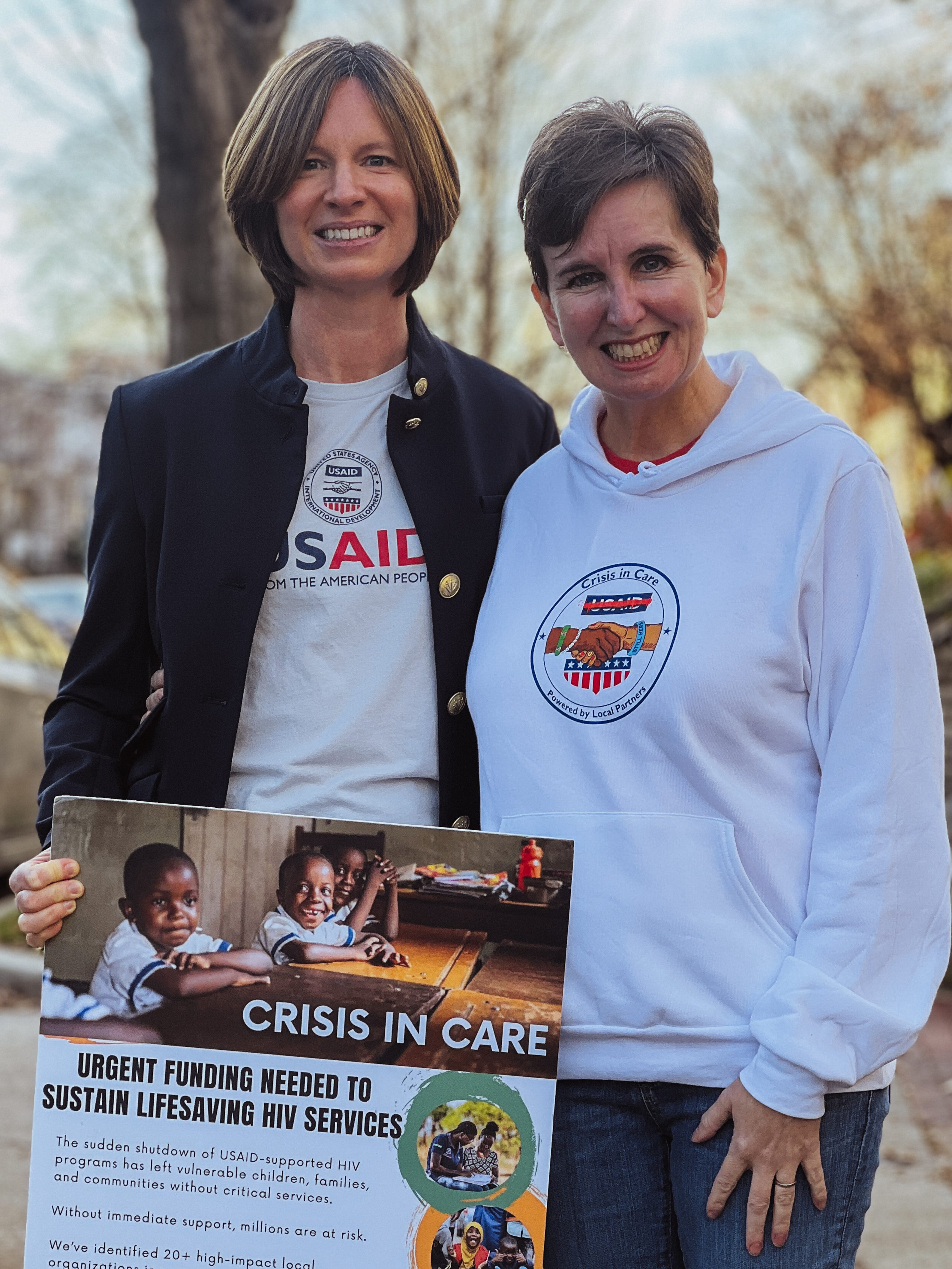
Crisis in Care has already funded thousands of HIV tests and medications in affected countries. The money was mostly raised among former employees of USAID. While it is merely a small bandage on the gaping wound torn open by USAID’s withdrawal, it’s a start. For Lisa Jamu, it has been a lifeline.
Jamu is the founder and director of Stepping Stones International, an organization offering support and education in Botswana to strengthen children and young adults and prevent the spread of diseases like HIV. The organization has been hit hard by the shutdown of USAID and has had to cut back on services. Jamu tells the story of a young woman in Botswana who was in a troubling relationship. She was depending on Stepping Stones, who were planning to get her out of danger and provide shelter for her. When USAID collapsed at the hands of Elon Musk, they could no longer manage to stay in touch with her. She was killed shortly after. A tragedy that, according to Jamu, could have been prevented had USAID still existed.
The young woman’s death is not among the 800,000 estimated by researchers, whose methodology focused on deaths due to illness and starvation. Cases like hers lead experts to believe that the real impact may be even higher.
For what benefit did Trump and Musk do this? USAID had a budget of around $35 billion in 2024. Considering the immense effect it had around the world, that is an astonishingly low amount of money. One might even say that Elon Musk’s fictional Department of Government Efficiency has shut down the one US agency that was truly efficient. Speaking of efficiency, Donald Trump only needed a few weeks to spend the yearly expenses of USAID on the war against Iran.
If you are interested in more about the fallout in some of the affected countries, I can highly recommend this short-form Documentary by The New Yorker. For more free articles like this one, subscribe to FrontlineDemocracy.