


Opinion
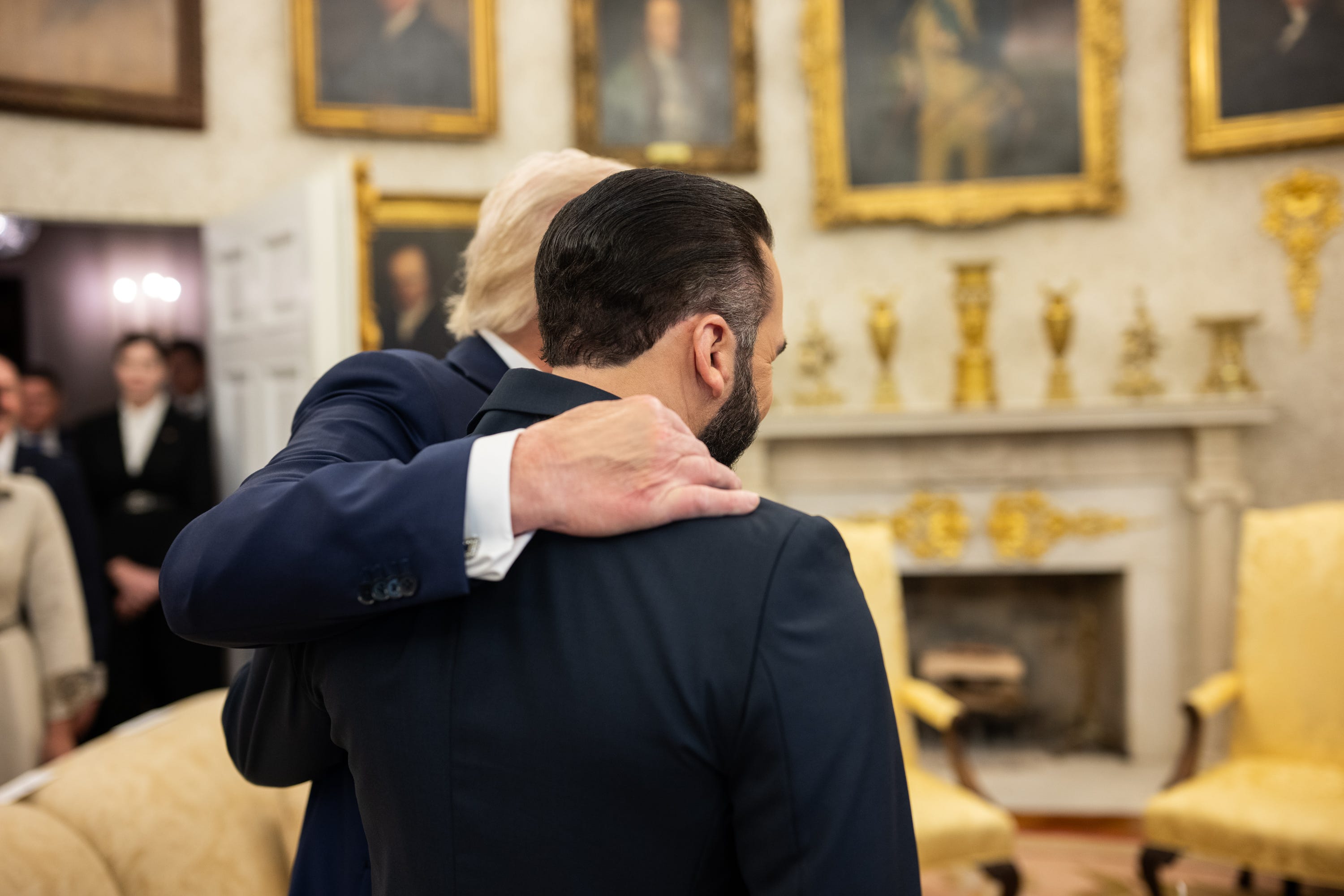
When President Bukele of El Salvador visited Donald Trump this week, he showed no interest in returning a mistakenly deported man from Maryland, Mr. Garcia. Both Bukele and Trump openly defied the 9-0 Supreme Court order to facilitate the return of the man. At one point, Trump’s team even twisted the situation, saying they won the ruling 9-0. In reality, they lost it.
But first, what happened?
The Trump administration deported 238 migrants, most of them from Venezuela, to a high-security prison in Salvador, where they are being held by El Salvador’s government in exchange for money. The deportations happened without any due process and in spite of a judge stopping the procedure with an order.
Mr. Garcia’s case is the most infuriating: A father of three without criminal record, swept off the street and deported without any due process, because he wore a Chicago Bulls hoodie. (The Bulls are a famous basketball team)
But he was not the only one deported without hearings or any significant evidence. What makes Garcia’s case so hard to grasp is that he is a migrant from El Salvador. He is now imprisoned in his home country without having committed any crime

The New York Times found that most of the 238 Migrants that Trump deported because they were alleged members of a notorious Venezuelan gang, lack any connection to the criminals.
Yes, some of the deported have committed serious crimes and may be part of the criminal Venezuelan gang. Most, however, had almost no evidence against them. They were deported because of suspicious tattoos, basketball caps or social media posts. If these people had been given a hearing, it seems likely that the courts would have granted them to stay due to a lack of evidence.
Can you call it a deportation?
Many media outlets are rightfully giving Mr. Garcia’s case a lot of media coverage, but the term everyone uses is “deportation”. It’s the word Trump’s team assigned to its unlawful actions, but it’s inaccurate.
According to the Oxford Dictionary a deportation is loosely defined as “expel (a foreigner) from a country, typically on the grounds of illegal status or for having committed a crime.”
The word has been used loosely by governments and media outlets, but in US law, deportation usually means the transfer of an immigrant back to his or her home country. There are some laws Trump is trying to use that allow deportations to 3rd, unrelated countries, but even in these cases, the deportee has a right to due process, including hearings in front of a judge.
So while the media isn’t wrong to use the term deportation, since it’s been used very broadly in history, there is another term that might fit the situation.
Kidnapping: “the action of abducting someone and holding them captive.”
Abducting means “taking (someone) away by force or deception”.
The main difference to a deportation lies in the legal process. Before an immigrant gets deported, they get their due process. They get a hearing and a chance to fight their deportation. The deporting nation, on the other hand, has to prove the legality of their removal.
The Trump administration did none of these things. They gave these men no hearings, no legal process. They grabbed them off the streets, put them on planes, and flew them to a private mega-prison, despite a Judge ordering the government to turn around the flights. So there’s no legal basis for any of these actions. It’s a government abusing its powers, defying a judge, to snatch people off the streets and vanish them in a mega prison, often based on just a tattoo or a basketball cap.
Imagine you are from Germany, like I am. You travel to the US and stay there without the proper paperwork (Visa or ESTA); you are now an illegal immigrant. Perhaps you did your paperwork and only lost it somewhere on the train. You could be deported if you came to the country illegally.
But imagine you are grabbed off the street, strapped into a van, and flown to a mega-prison in El Salvador without any hearing, because of a suspicious hoodie. Calling that action a deportation seems like a stretch. Especially once you consider what kind of prison these migrants land in.
The prison no one ever leaves
El Salvador’s terrorism confinement center (CECOT) is a controversial mega prison like few others. President Bukele established the high-security prison to house some of the most dangerous gang and drug criminals in the country. There is, however, a lot of criticism because, according to reports, few inmates received any sort of legal process to determine their guilt. Critics also fear that Bukele could use the prison to disappear political opponents, as the president has ramped up attacks and arrests on political opponents over the past years, eroding the democratic institutions of El Salvador. (He calls himself the “coolest dictator”)
According to Bukele’s government, no inmates are ever supposed to leave the prison. There are no differences in the length of sentences. If you land in Bukele’s prison, you never get out, which makes the imprisonment of migrants without any due process even more questionable. Over the past years, Amnesty International has alleged abuse of inmates, overcrowding, and “patterns of grave human rights violations.”
El Salvador is also being paid by the US per inmate it detains for the US.
There is little to no public information about the prison, as no one there ever leaves. The only available footage is slickly shot propaganda footage from El-Salvador’s government. Sen. Chris van Hollen from Maryland (Democrat) was denied access to the prison or a meeting with Mr. Garcia. He was even denied a phone call with Mr. Garcia.
Bukele’s resistance to the growing pressure to release Mr. Garcia or even show him to a Senator begs many questions. Perhaps he sees it as a risk for someone who was inside his mega-prison that “no one ever leaves” to be released. After all, Mr. Garcia would be a first-hand witness to speak about the allegations of human rights violations.