


A rare opinion piece
In the midst of the increasing terror that engulfs our world, between wars in the Middle East and Ukraine and the threats to democracy in the western hemisphere, there was one thing that gave me unexpected comfort and hope in the past week: The Artemis II.
Apparently, I am not alone. According to a Reuters/Ipsos poll, 80% of Americans have favorable views regarding the first crewed mission to the moon since the 1970s. This comes at a time when most Americans, and Europeans for that matter, feel good about very little in this world. So why is this international effort of mankind to return to our moon appealing to so many people in these times of geopolitical uncertainty, and what benefits could the story of Artemis II have for our political world?
The Best of Us
Anyone who did not closely follow the news of the Artemis program might ask themselves why we are going back to the moon in the first place. After all, it’s been more than 50 years since Neil Armstrong took his “giant leap for mankind”. Subsequent Apollo missions have landed on the moon five more times until the program was scrapped as the space race with the Soviets ended. This time, however, mankind is going back to the moon for a different reason: To stay.
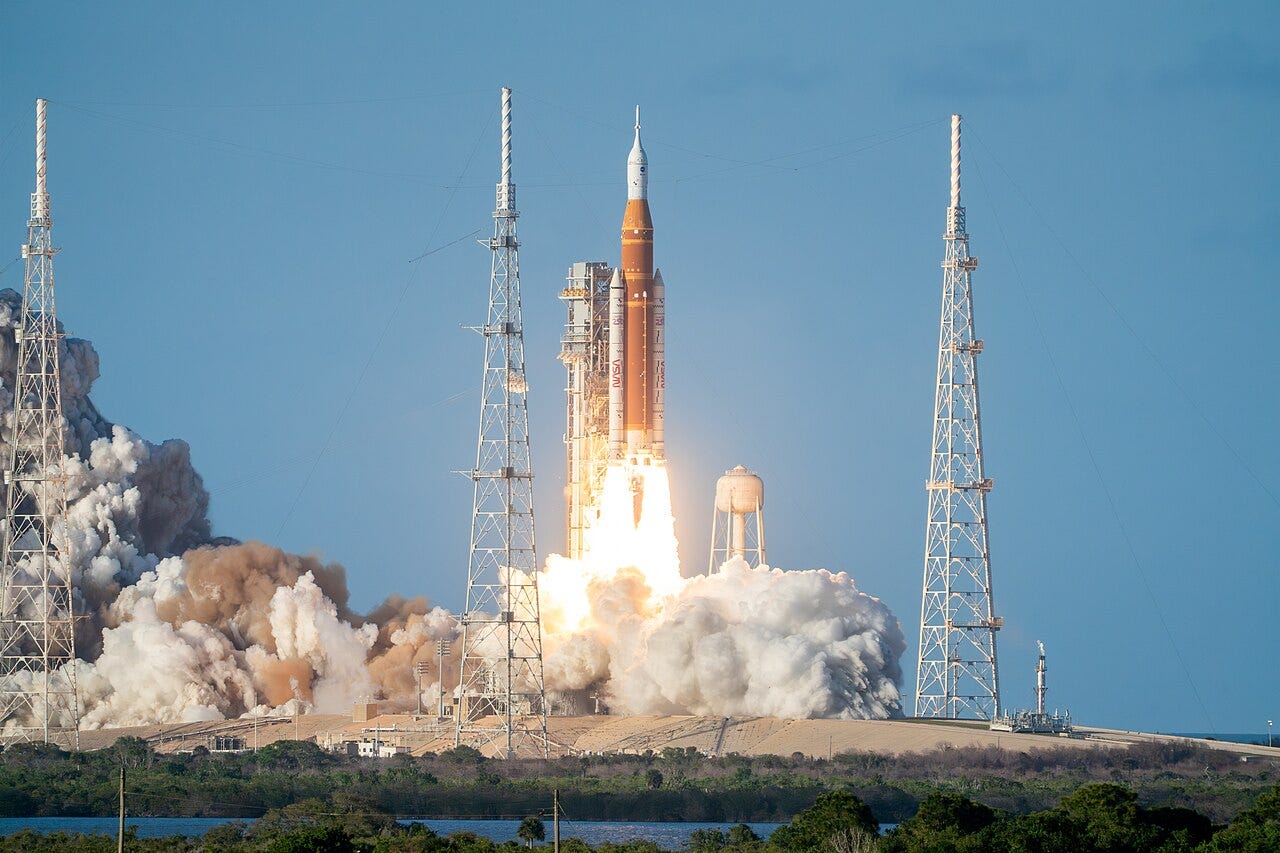
After Artemis II’s successful moon orbit, NASA aims to land Astronauts on the moon in 2028. These missions have a purpose that goes beyond returning to a place we’ve been before. The Artemis Astronauts will be tasked with building a base, effectively colonizing the moon. While the space race of the 60s may be over, there is some competition, as China is eying their own base on the lunar surface. In the long run, a primary goal of the Artemis program is to get to a point where we can land on Mars. A planet no human has ever walked on.
That goalpost is still far away, but Artemis II’s mission is bringing it a bit closer. There are a few reasons I can think of that might explain why the new moon mission is finding so many admirers, not only in America, but around the globe.
While the four Astronauts of Artemis II didn’t land on the moon, they set a historic record last Monday. With a maximum distance of 406,770.34 km (252,756 miles) to Earth, they traveled further into space and away from home than any other human being before them, breaking a record set by Apollo 13 55 years ago. So far, the 2020s have been seen by many as a decade that has taken humanity not forward, but backwards. After years that saw the first African American US President and unprecedented international cooperation to solve the climate crisis, progress in the 2020s stalled and even reversed. The COVID-19 crisis happened, the war in Ukraine brought Western relations with Russia to a historic low point, and the far-right in Europe has risen to heights not seen since the era of fascism in the 1930s. In America, Trump is reverting years of civil rights progress and attacking the sciences and diversity. The bright minds of our Earth are so occupied with putting out the fires that are spreading around the world that there is no more time left for progress. And now, six years into this challenging decade, humanity is pushing the bounds of what’s possible again.
A Crew from a Better Time
The other major reason why this mission gives me hope in these times is the crew.
Our current state of global affairs is as tense as ever before in this century, and the world order is being torn out of balance by Mr. Trump. The friendship and cooperation between European Nations, Canada, and the US, and their aim to build a better world, was baked into my consciousness growing up in the early 2010s. In 2026, all that has changed: opinions of European countries and Canada towards the US have dropped sharply as the Trump government goes after its allies with unprecedented rhetoric. And not only is our understanding of international cooperation struggling under Trump, but the president has undone years of progress intended to promote equal treatment of women and minority groups. In a way, the Artemis mission is the antidote to Trump (which is funny for a different reason, but more on that later).
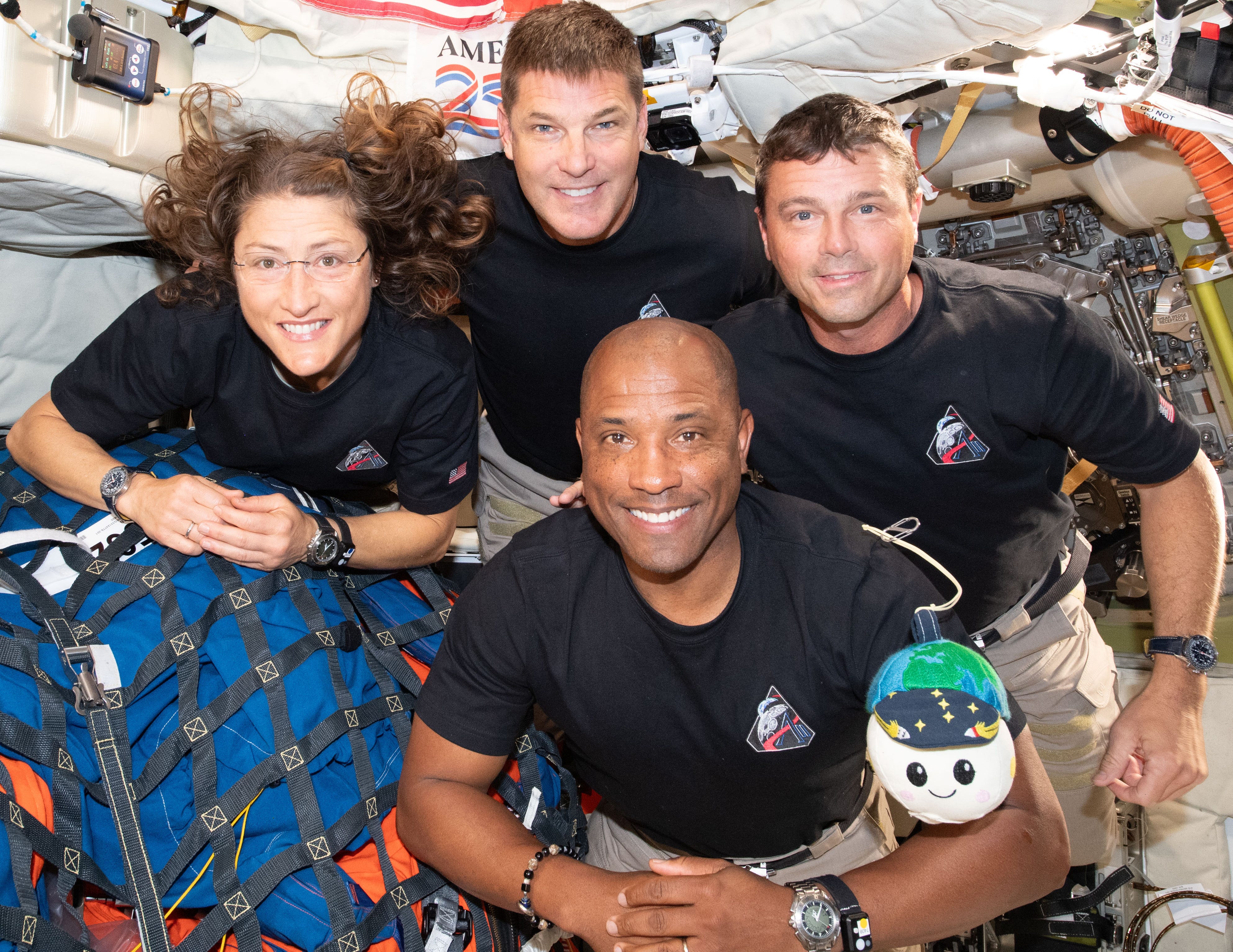
With Artemis II, the first woman, mission specialist Christina Koch, the first African American, pilot Victor Glover, and the first Canadian, mission specialist Jeremy Hansen, have orbited the moon. The fourth Astronaut is American commander Reid Wiseman. Canada’s inclusion in the mission is no accident, because the Artemis Program is not purely an American program. It’s a collaboration between numerous countries that includes NASA, the European Space Agency (ESA), the Canadian Space Agency (CSA), and the Japan Aerospace Exploration Agency (JAXA). I particularly look forward to the upcoming missions, when the first German might fly to the moon. At the same time, Europeans are growing wary of the US as a partner, with the large majority of Germans classifying the US as untrustworthy. So while our worldview of collaboration is deteriorating here on Earth, it seems to be doing well in space. While Trump rails against Canada, Europe, science, and diversity, these issues seem to be unaffected in space. Now comes the funny part: The Artemis Program was initiated by Mr. Trump during his first term. His executive order directed NASA to return to the moon and aim for Mars. Apart from that, Trump, of course, had little involvement in the planning of the program, but it’s a good reminder of how different Trump’s second term is from his first.
Most of the viciousness is happening in Trump’s second term. In fact, most of his actions that affect our world happened in the past 15 months. While Trump 1.0 - often ranked by scholars as one of the worst presidents in U.S. history - backed NASA, Trump 2.0 is suggesting deep budget cuts that could imperil the Artemis program he himself initiated. A move he might consider unwise, should he remember that he initiated it.
Among all of this chaos, there was something deeply inspiring and hopeful about following the journey of the Artemis crew. After their successful splashdown, Astronaut Jeremy Hansen stood arm in arm with his fellow space-travelers and said that they were merely a mirror of our world. Indeed, they are a mirror of our world, but they also are, and very much so, the polar opposite of its leader. Four Astronauts, diverse as our world is, in international cooperation, and backed by an equally diverse team of dedicated scientists, show us that humans are capable of doing great things if we set our minds to it. Right now, our minds and our capital are set on seeking progress in a different area: Building machines for war. As Trump proposes budget cuts, he pours billions into rockets for his war with Iran. While some defense spending may be inevitable for Western nations, like Ukrainian defenses against an aggressor that threatens their democracy, the war in Iran is a war of choice.
Perhaps, one day, when voters and leaders come to their senses, we will spend this money on science that improves our world and takes us to new heights. To places we have never been before. To make future generations doubt the limits of what humanity can do. Reid Wiseman, Christina Koch, Victor Glover, Jeremy Hansen, and the international team behind them have certainly shown us one thing: Yes, we can.