


In the last two months, the world turned its attention to the eastern regions of the Democratic Republic of Congo, where the M23 rebel group made significant advances and captured the city of Goma.
The fighting has caused countless civilian casualties and is riddled with war crimes and atrocities. Human Rights Watch reported cases of rape and murder of civilians by M23. Last month, news outlets broke news that the fighting in Goma led to a jailbreak, in which the male inmates raped female inmates, before burning the facility and the women in it.

According to UN experts, M23’s new strength is fueled by neighboring country Rwanda, which not only supplies M23 with advanced weapons but is also said to have sent 4.000 of their soldiers to join M23’s fight. The region of eastern DRC is rich with minerals that Rwanda is accused of stealing through M23. Still, there are also historical and ethnical conflicts influencing the fight of the Tutsi-led M23, dating back to the Genocide in Rwanda in 1994, where the majority group, the Hutu, murdered one million Tutsi and non-complying Hutu.
The latest UN statements cite evidence that Rwanda is supplying and supporting M23. This has caused the European Union to rethink mineral trade agreements with Rwanda while neglecting a far more important issue—an issue that may be difficult to tackle, as so many different countries benefit from it: arms exports.
So, where does Rwanda, and by that M23, get their weapons?
Arms exports to Rwanda Map (2019-2023)
The map shows that both non-EU and EU countries from the European continent are arming Rwanda but to different extents. While EU states dominate the export rankings in terms of units sent, Russia and Turkey dwarf all other exporters when it comes to the estimated value of exported weapons. The reason is that the weapons they send are much larger. Russia sent Rwanda 4x Mi-35M attack helicopters, each valued at around 35 million USD, and Turkey exported over 100 armored vehicles, with the estimated cost per vehicle being around 800.000 USD.
It’s important to mention that this data mainly comes from self-reported sources, potentially leaving out exports from countries that don’t report their arms sales, like China or other African nations.
While the map above gives us a detailed overview of the kinds of weapons sold to Rwanda, it is much more difficult to prove that these weapons are being used in Congo by M23 & Rwandan soldiers. However, some evidence has surfaced in the past months.
Grenade launchers & rifles from Poland for M23
Poland, an EU-member state, was the only country in the self-reported UN list that exported weapons to Rwanda in 2023. The exports included 2.300 assault rifles and 100 under-barrel grenade launchers, for an estimated value of $7 Million USD.
Official Images of the Rwanda Special Operation Forces show soldiers with Polish assault rifles of the type GROT, mounted with an under-barrel grenade launcher. But not only Rwanda’s special forces are using these weapons.
Images from eastern Congo, show an M23 soldier holding the same Polish GROT weapon in his arms, which is easily recognizable by its under-barrel grenade launcher.
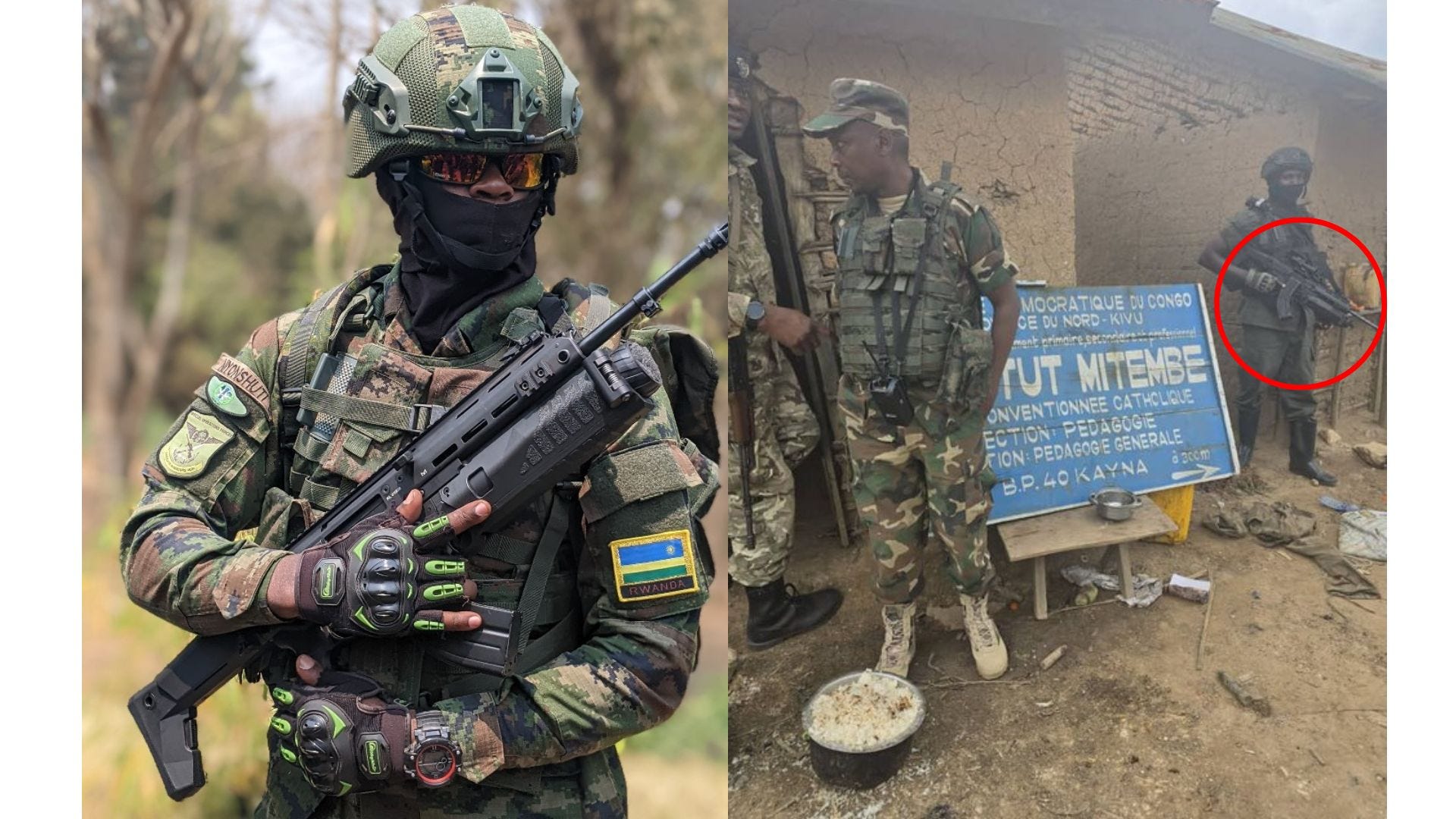
It therefore seems abundantly clear that Rwanda is supplying M23 with weapons it imported from other countries, including EU-member states.
Assault Rifles from Czechia & Anti tank guns from Slovakia
Czechia represents the largest export amount if one just looks at the amount of units delivered. From 2020-2022, the country has exported over 3.000 assault rifles including ammunition, as well as 2 combat vehicles, amounting to an estimated 5,6 million USD.
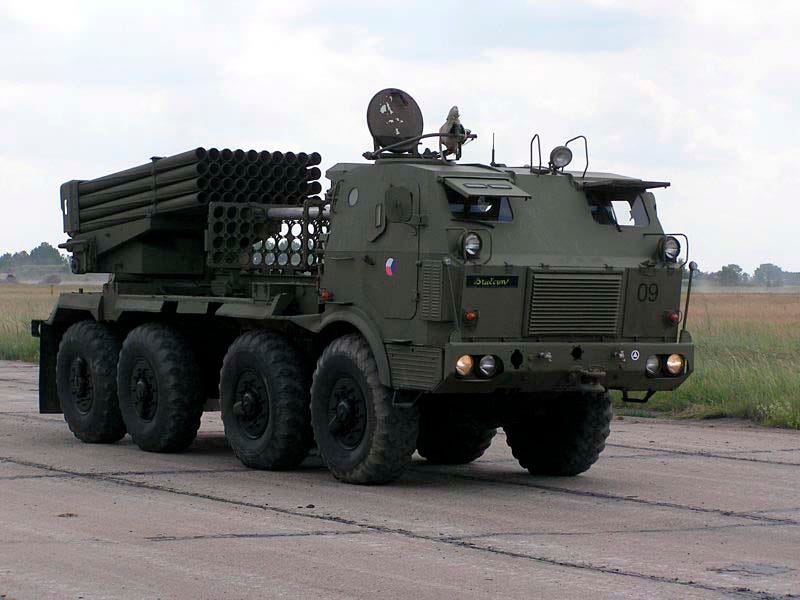
Slovakia, on the other hand, has exported much larger weapons, such as 60x 23 mm anti-aircraft cannon 2A7M or 2x RM-70 rocket launchers.
What about Israel?
According to news outlets, Israel has long been an important arms exporter for the region. Israel's exports are however difficult to assess, as the country doesn’t report their arms exports to the UN. The retired South African General Motau, who was involved in previous peace talks in the DRC, claimed that the weapons used by M23 resemble those of Israel’s Defense Forces, though he doesn’t cite specific evidence.
Israel has kept a close relationship with Rwanda over the past years and was at the center of a debate about arms exports before and during the Genocide in Rwanda.
Although there are no recent documented arms sales. Israel has supplied the Rwanda military with many types of weapons, ranging from howitzers to assault rifles over the past two decades.
New Rules in Germany
Germany’s arms exports to Rwanda mirror a change in politics in the country. In 2021, the newly elected government of SPD, the Greens, and the Liberals promised change in Germany’s arms export policies. The Greens had long argued for a stop of exports into conflict regions. So the record arms exports in the following years naturally drew criticism, particularly from the political left. While it is correct that Germany’s arms exports have skyrocketed, the details are often overlooked. The boost in arms sales mainly comes from exports to Ukraine, a close ally to NATO. Exports to non-allied, so-called “third states” have dropped drastically. This is also evident in Rwanda.
The former CDU-led Government approved the sale of drone defense software valued up to 27 million euros in 2020 and 2021. These sales do not show up in Germany’s detailed self-report to the UN, which is likely due to the issue that electronic defense software is not labeled as a conventional arms type by the U.N. When the new “Ampel”-government took over things changed. According to the German arms sale report, the government blocked a planned weapons export to Rwanda in 2023, likely due to concerns about the instability in the region.
Beyond Europe: Turkey, Russia & China
If we look at the estimated value of weapons exported to Rwanda, Russia and Turkey dominate the charts. That is, as mentioned before, because of the high value of their exported weapons, such as attack helicopters or armored vehicles. China’s exports are difficult to investigate since they are very obscure. There is however a verified transaction of ammunition & explosives worth 145.196 USD.
Another country whose arms sales are difficult to assess is South Africa. According to UN Databases, South Africa exported over 16.000 kilograms of ammunition to Rwanda in 2022, worth just over 3,2 million USD.
The high estimated value of exports from Russia, South Africa, Turkey, and European countries begs the question if the actual value of arms imports is much higher than the official number, which totals up to $58 million in 2021 with all other years showing significantly less exports.
Where to go from here?
The intervention of Germany’s government to stop arms sales to Rwanda offers a perspective on how to deal with the evolving situation around Rwanda and M23. But Germany’s export ban has little effect if allied EU countries like Poland and Czechia keep profiting from the violence in eastern Congo. With plans to increase arms production in Europe in the wake of the Ukraine conflict, it seems even more important to make sure that European arms do not fuel the killing in this conflict. UN logs even show that some countries like Bulgaria are supplying both sides of the conflict: Rwanda and the Democratic Republic of Congo. But since there is no strategic interest at play for the EU, these arms sales are done for one objective only: profit.