


A few months after the 2024 election, I talked with my family in Germany about Trump’s return to power. When the 2028 election came up, the prevailing question was: Who do Democrats even have? Well, I said, there’s this 37-year-old Senator from Georgia.
There are many reasons why I put my imaginary money on Senator Jon Ossoff, now 39, this early. In fact, when I published my 10 predictions for 2026, I wrote that I had my eye “fixed on Ossoff” regarding the 2028 presidential race. Back then, the prediction markets priced Ossoff’s chances of becoming president below 5%.
Opinion
On Election Night, my arguments were reinforced, and Ossoff is now the frontrunner according to markets. After his landslide win against Mike Collins, practically every newspaper and pundit jumped onto the Ossoff train. I want to share my thoughts on why he seemed like the obvious choice all along.
I feel certain enough to say that, should Jon Ossoff decide to run, he would be the clear favorite not just for winning the Democratic nomination, but for winning the General Election on November 7th 2028.
Here are my reasons…
The Search For Flaws
After Kamala Harris replaced Joe Biden in 2024 and narrowly lost, pundit after pundit asked what Democrats needed in a candidate to win again. A progressive fighter like Alexandria Ocasio-Cortez (AOC), who can ignite the base? An experienced Governor from the Midwest? Or a red-state moderate with broad appeal?
Instead of looking at a candidate’s perks, I’ve always found it more useful to start by searching for flaws. Kamala Harris ran a very effective campaign, yet she was tied to an unpopular President and high inflation, which is why she lost. You can play this game with any 2028 contenders. AOC is a very progressive figure who Republicans and conservative media have framed and defined negatively over the past 8 years. Gavin Newsom carries similar baggage: America already knows him as the Governor of California, a state Republicans loathe and view as radically left; or they know him by Trump’s nickname “Newscum”. Overcoming people’s first impression of you requires a lot of work. AOC and Newsom are also from the Democratic bastions of New York and California, which traditionally does not bode well with a lot of Americans.
Other candidates have different, at times more subtle flaws. Shapiro, Gov. of Pennsylvania, will struggle in a primary over his pro-Israeli stances. Whitmer, former Gov. of Michigan, is DOA after her infamous picture in the Oval Office. Candidates like Sen. Booker (NJ), Sen. van Hollen (MD), or Gov. Pritzker (IL) may have cleaner slates, but most of them lack the charisma, excitement, or platform to become favorites in a primary contest. (Pritzker, a billionaire, at least has the financial resources).
Now take a minute and try, as hard as you can, to find a flaw like this for Jon Ossoff. It’s what I have been doing for months now, and while Ossoff is not perfect, he lacks anything I would view as a drag in 2028.
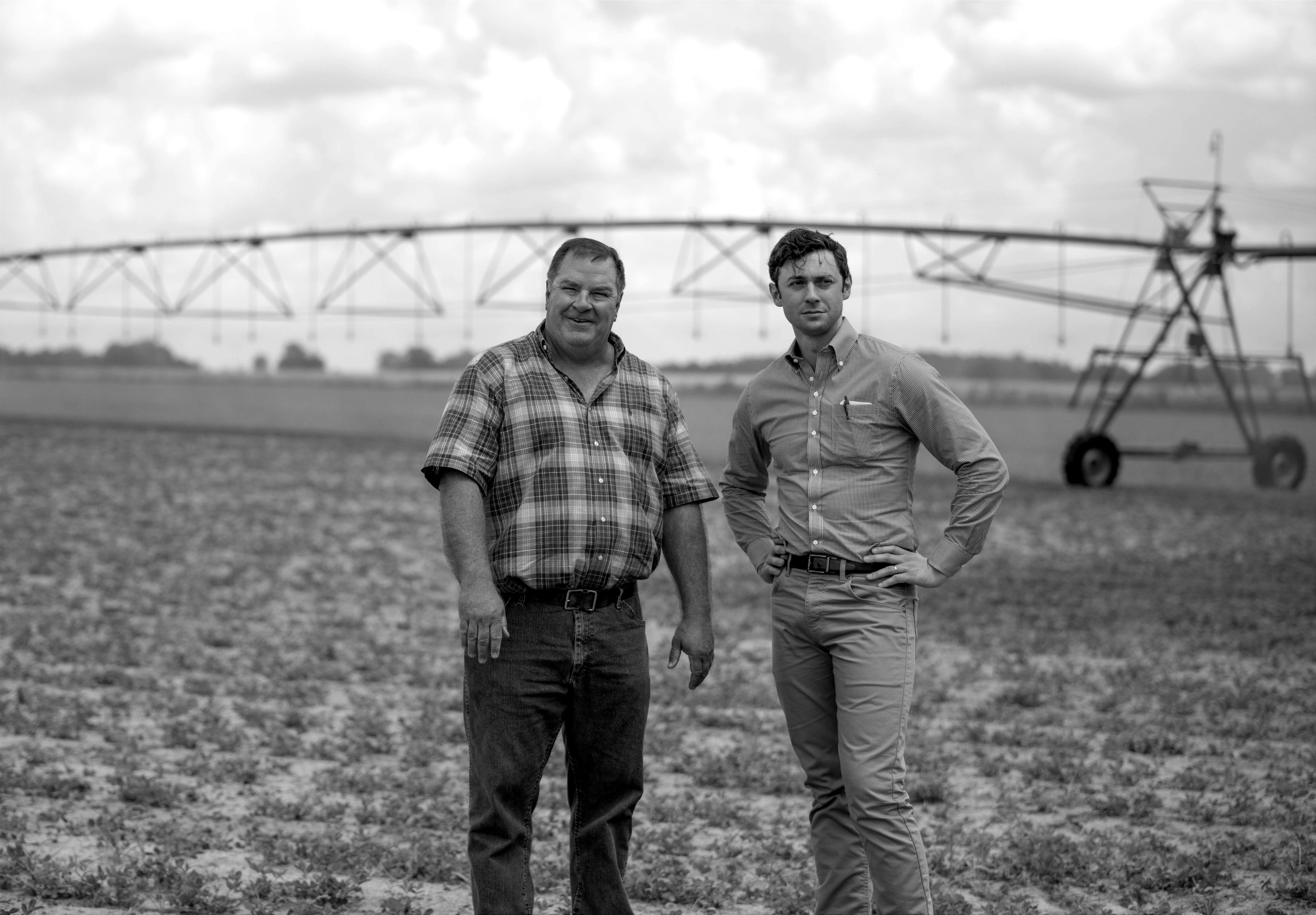
Ossoff Might be the Perfect Mix
Jon Ossoff, a former journalist and documentary filmmaker, became a Senator in 2021, when he delivered an upset and defeated incumbent Republican Sen. David Perdue (R) in Georgia’s runoff election on the eve of the January 6th riots. Together with Rev. Raphael Warnock, who defeated Republican Kelly Loeffler for Georgia’s other Senate seat that same night, he gave Democrats the 50th seat in the Senate and, by that, Biden a trifecta.
The first four years, Warnock stood in the spotlight, largely because he faced (and won) re-election in the difficult year of 2022. After the 2024 election, however, Ossoff became more and more prevalent in my thoughts about 2028, even as he still shied away from most media duties and wasn’t even part of any early 2028 primary polls.
I will do an extensive 2028 power ranking soon. Don’t miss out!
2024 was a year that divided many Democrats on the question of candidate quality. It quickly became clear that Ossoff was one of the few who could clear all the bars.
Electability Arguments
Ossoff would be 41 years old in 2028. Becoming the youngest president in US history would put him far from the age concerns that dominated Biden’s and, to an extent, Trump’s presidency. He has no connections to the Biden administration and cannot be tied to economic struggles, the border crisis, or inflation. Both progressives and Republicans in Georgia tout his work as a Senator. This sort of crossover appeal became evident last Tuesday, when Ossoff won re-election by 20 points in a state Trump had won just two years ago.
An analysis by Will Jordan showed that no other Senate candidate won over more 2024 Trump voters than Jon Ossoff. Not even Adam Hamilton or James Talarico. In the overall Senate performance rating with Swing voters, only Hamilton and Cooper did better than Ossoff. Neither will run for President in 2028.
Two other candidates slightly outdid Ossoff: Josh Shapiro and Rob Sand, but both were running for Governor, where party polarization is generally lower.
Shapiro seems interested in running. He might have crossover appeal, but the Israel issue will cause trouble for him in the primary, as it will for many. Very critical voices on Israel, like Abdul El-Sayed, would instead struggle in a general election. The problem is that the issue is so heated that almost any stance is criticized.
Ossoff might have found the perfect compromise. He likely won’t struggle with the Jewish vote or face antisemitism allegations. After all, Ossoff would be the first Jewish President of the United States. He would also face much less scrutiny than Josh Shapiro in a primary. In early 2025, Ossoff was one of the few Democrats who voted to stop military aid to Israel amidst concerns about a genocide in Gaza. Additionally, quite a few Democratic hopefuls have taken money from the Israeli-allied AIPAC, which progressive Democrats consider a black mark for any candidacy. Ossoff has not received AIPAC money (despite some AIPAC-tracker falsely claiming so). He only received money from J-Street, a progressive Jewish PAC which is critical of the Netanyahu government.
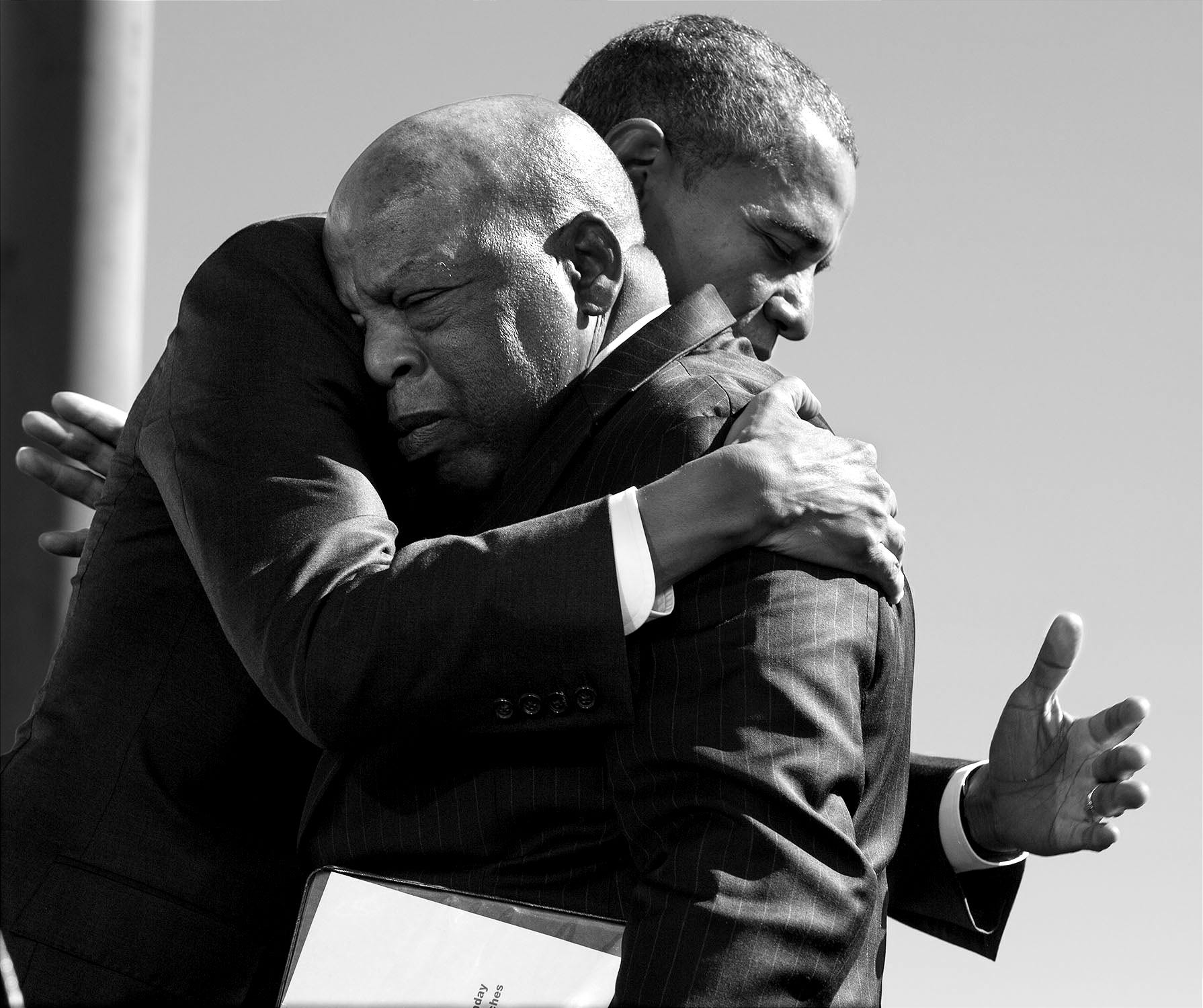
There is one more crucial argument for Ossoff’s general election electability: his home state. As a Georgia Democrat, Ossoff was mentored by the late Representative John Lewis. He has a strong relationship with the black voter base in the Deep South, which will be vital for the success of any primary campaign.
His home state will also help Ossoff in the general election. As I said before, many Democrats are wary of nominating a New York or California Democrat again. Georgia is in the Deep South, a traditionally Republican region. Democratic Presidential candidates from there, like Bill Clinton, fared well in the past.
Ossoff’s home state, which he just won by 20 points, is a crucial swing state with 16 Electoral Votes. Those are 16 votes Democrats could almost certainly count on if they nominated Ossoff.
In the past, Democrats’ easiest path ran through the blue wall. They would only need to flip Michigan, Wisconsin, and Pennsylvania to win exactly 270 EVs. With Georgia, Democrats could afford to lose either Michigan or Wisconsin. Right now, they are the clear favorites to win all three if they nominate a decent candidate and Trump doesn’t magically become a good president. Of course, the outcome will also depend on the Republican nominee. Of the likely candidates, Marco Rubio could perhaps be the strongest choice, but even he is now tied to Trump and would have to navigate a knives-out primary.
So we have a swing-state candidate with strong crossover appeal who managed to steer clear of almost all pitfalls. Other candidates might meet these requirements, but most of them lack one of the following: Excitement or Charisma.
Ossoff’s 2026 Campaign put him on the Map
For most, Ossoff became a possible 2028 contender this summer, when he started holding campaign rallies for his re-election. Clip after clip of his speeches went viral, and it prompted some of the first pollsters to include his name in the 2028 primary questionnaire. Ossoff’s style is energetic, and yet precise. His charismatic appearances are even being compared to Obama’s. His rhetoric is highly focused. He outlines specific examples of Trump’s corruption and connects them to the struggles of everyday people.
Ossoff at a campaign rally with President Barack Obama and Keisha Lance Bottoms in 2026.
While Andy Beshear (Governor, Kentucky) or even Mark Kelly (Senator, Arizona) meet most electability requirements, they lack Ossoff’s charisma, which extends to the debate stage.
David Perdue already struggled against Ossoff in one 2020 debate, and he decided to sit out another, setting up the iconic photo people love to pull out when someone thinks about dodging a debate again. Mike Collins, Ossoff’s opponent this year, was obliterated on the debate stage with quotes like this:

“If John Lewis were marching today from Selma to Montgomery, Mike Collins would be grabbing a billy club.”
Ossoff also has the necessary grassroots support. He raised over $100 million dollars in this cycle, almost exclusively from individual donors, despite being in a relatively uncompetitive race. Only James Talarico raised more. In a primary where high-propensity voters matter more than in a general election, Ossoff’s cross-nation fundraising appeal will help him significantly.
So, will it be Ossoff? I left some Democratic candidates out of the flaws section. Most notably, Pete Buttigieg, who is at least as good a communicator as Ossoff and brings the same youthful, clean slate to the table (though Buttigieg did work as transport secretary under Biden).
If Ossoff is the general election nominee, I would call him the likely winner unless something dramatic happens. I am a bit more uncertain about the primary, where electability can sometimes take a back seat. What I am most uncertain about, however, is whether or not he will actually run.
While Shapiro, Kelly, Booker & Co. are already laying the groundwork for a potential run, Ossoff seems ever so focused on his work as a Senator. Ahead of the 2026 elections, he reiterated that he would not consider running for President. A Senator from Illinois said the same thing in 2006. Two years later, he became President.