


Anyone who’s ever been to Manhattan knows the heart of New York City is incredibly loud.
That is largely because of traffic. Thousands of cars drive through cramped streets and honk at each other every minute of every day. It’s hard to blame them since traffic jams in Manhattan are insane, but the city offers citizens alternatives to cars: The NYC Subway, buses, and bikes. Nevertheless, traffic in the Big Apple seemed to be broken for good.
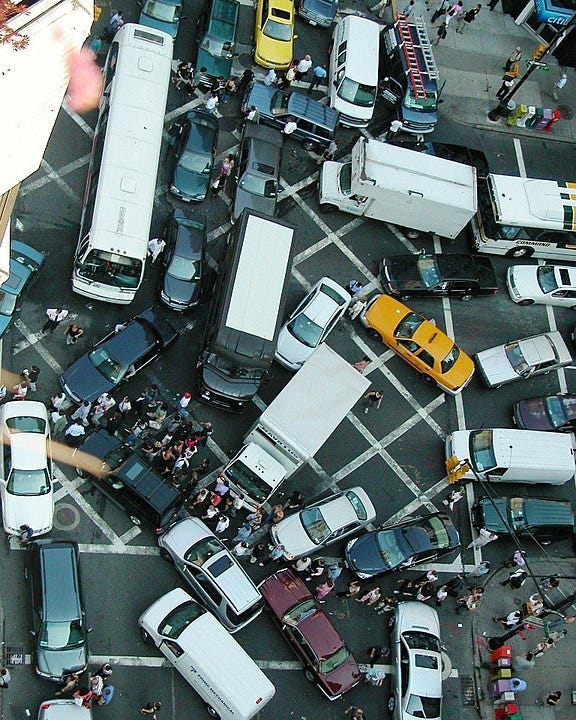
Then, at the start of 2025, New York City started its congestion pricing program. It’s intended to solve Manhattan's traffic problems. How does it work?
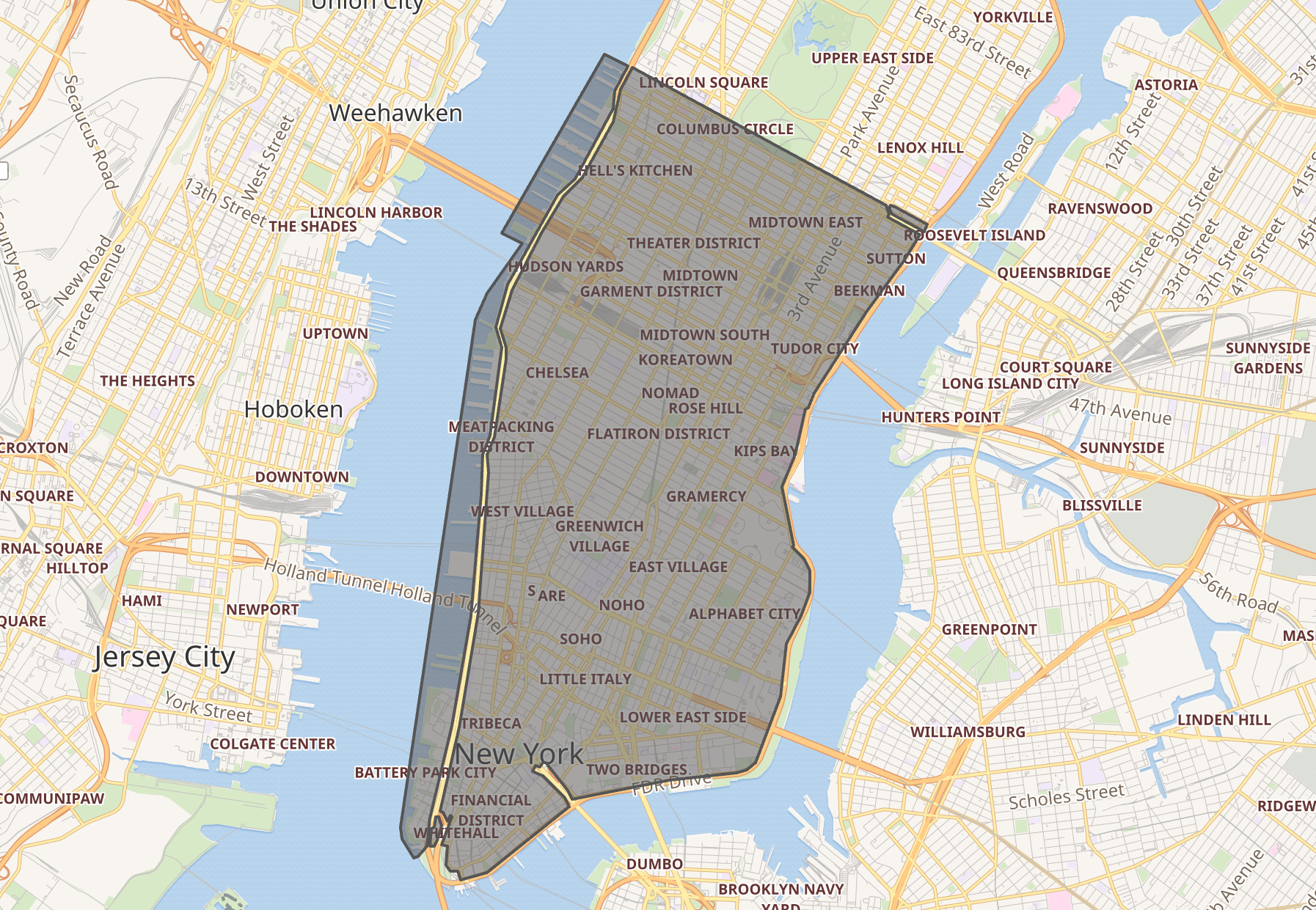
Starting on January 6th, 2025, every vehicle that enters the congestion zone, which stretches from Manhattan’s southern tip up to Central Park, has to pay a small fine, a toll. Cars get scanned by cameras (so there are no classic toll stations one might know from European highways) and get fined $9.
Rates for heavier vehicles like trucks can be higher, rates for taxis and night-time rates are much lower. The goal was to incentivize more people to use different, greener means of transport while also raising money to further improve the city's public transit.
Congestion Pricing is also a deeply unpopular policy. Just above 30% of New Yorkers had a favorable view of the program, which wasn’t exactly a surprise. A lot of New Yorkers were dissatisfied or even angry when they found out that they had to pay $9 to drive through or into Manhattan. Others were frustrated that they had to switch to public transit options. New York Democrats pushed ahead with the program anyway. Why?
A worldwide phenomenon
They knew about a worldwide phenomenon. NYC wasn’t the first metropole to charge vehicles for entering high-density traffic zones. Cities like London and Stockholm have already implemented similar programs, and they all experienced the same phenomenon. Their congestion pricing programs all started as unpopular, but then grew more and more popular over time, as citizens felt the benefits.
It’s a strange phenomenon because the politicians were very clear about the benefits of congestion pricing. Yet, the majority of the public never seems to care. They only care about the price tag. Later, when the promised benefits arrive, the public grows more favorable of the program, with polls showing strong support to keep it in place. What does that tell us?
It tells us that “the people” are often uninformed and, as a result, tend to have a poor judgement (think: Brexit). In New York City, Democrats promised that congestion pricing would bring faster public transport, fewer traffic jams, fewer noise complaints, less air pollution, and, in summary, a better quality of life, with data from other places to prove it.
Only about a third, most of them highly-informed voters, were convinced. If there had been a referendum, something direct-democracy advocates keep calling for in almost all cases, congestion pricing most likely would have failed the vote and would not exist in Manhattan and other cities.
Now, even though it has been just a little over five months of congestion pricing in New York City, the public is slowly growing more favorable of the program. In April, about 42% of NYC residents wanted to keep congestion pricing (56% still want to eliminate it). That’s not a great number, but it’s a clear improvement from the poor rating of 32% in December. Why? Because they are (slowly) starting to see the benefits.
What are the benefits in NYC
I’ve talked a lot about the benefits of congestion pricing in NYC. Here are some of the top benefits residents of New York City are already seeing, with data analyzed by the New York Times:
Faster traffic speeds
Faster peak commute times
Local buses are faster and less delayed
Traffic outside the zone hasn’t gotten worse (sth many critics predicted)
Transit ridership (Bus & subway) is up to record levels
Taxi trips are up
Bike trips are up
Car crash injuries are down
Fire response time is slightly down
Parking violations are down
Traffic noise complaints are down
School busses have fewer delays
(Source: The New York Times, 2025)
Other benefits, like lower Asthma rates, need more time to materialize, but can already be seen in cities with similar programs.
Restaurants and local businesses are also doing okay, despite concerns that reduced car traffic would hurt their financials. Naturally, President Trump is fighting to eliminate the program and has threatened to cut federal aid to the State of New York.