


It was around 01:30 am on a cold December night when Fred Hampton, the deputy chairman of the Black Panther Party, abruptly fell asleep in the middle of a phone call with his mother. A few hours later, he was assassinated in his own bed.
This is not a story about a mystery. Nor is it a quest to find the assassins and their motivations. We know who murdered Fred Hampton. We know, because the policemen who shot him didn’t have to hide. They walked out of the house with Hampton’s lifeless body and smiled for the cameras.
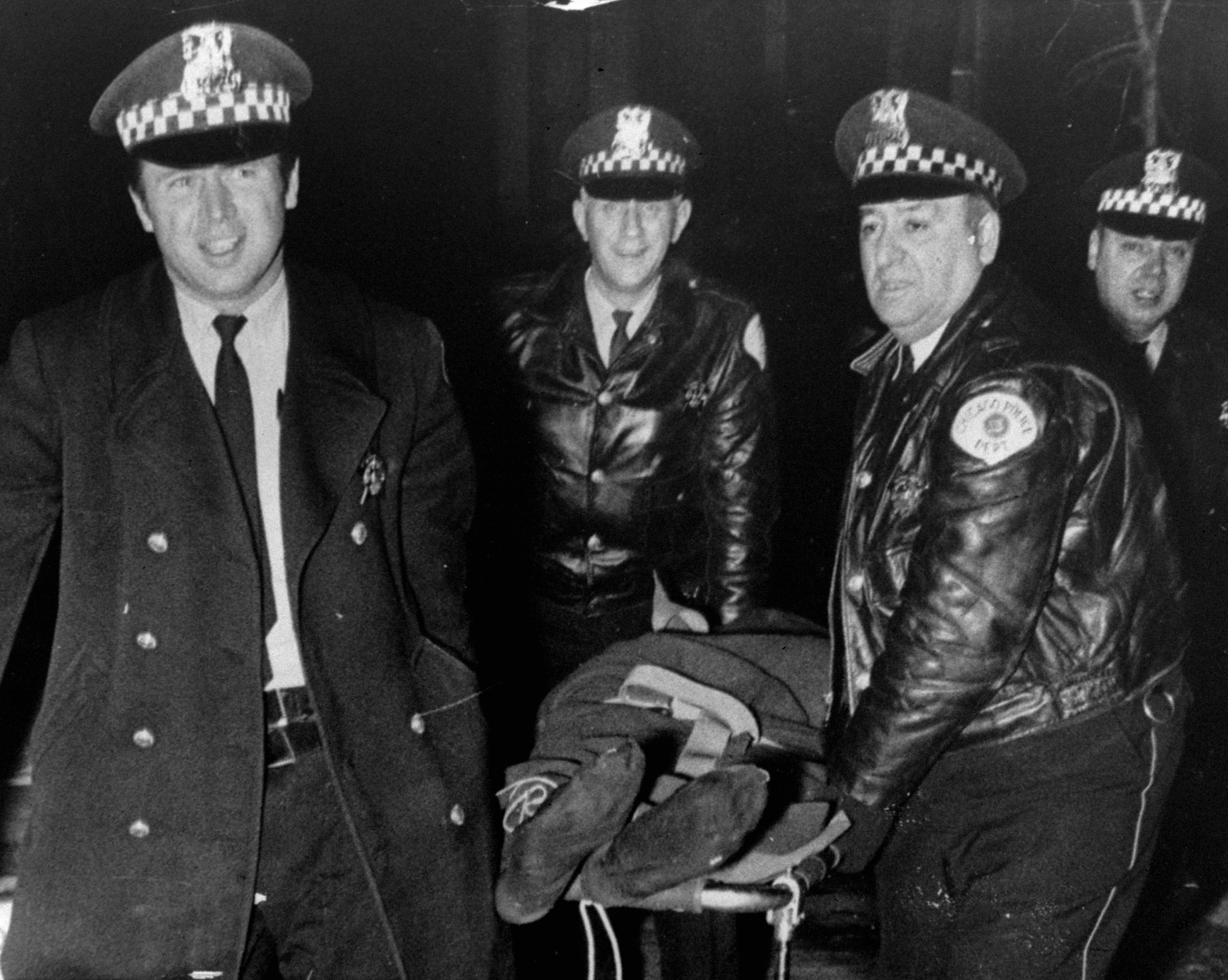
In the current debate about political violence, it is crucial to remember a time in the US when a political murder could be orchestrated and carried out without any real consequences, but with pride. To understand how distorted today’s debate is, we need to look back to a time in which such violence was routinely used against African Americans. Not just by lunatics with rifles, not just by the Klan, but by the Government.
The Panthers
In the era after Dr. Martin Luther King Jr’s achievements and his following assassination, the civil rights movement struggled to find a footing. Without Dr. King’s charismatic leadership, their cause was in danger of being pushed into the background. All while police brutality, Klan violence, and open racism continued to torment black Americans, particularly in the South.
The Black Panthers sought to fill that gap, but they had a different approach than Dr. King. While Dr. King famously refused to take part in any kind of violent actions, even in cases of self-defense, the Panthers encouraged its members to take up arms. They viewed it as essential that black Americans had the power to defend themselves. Made possible by the 2nd Amendment, the right to bear arms, the group armed itself and taught members how to fight back if they were being threatened. Members of the Panthers were instructed to never incite violence themselves and only use their weapons as a tool of defense. In fact, the group’s full name read: Black Panther Party for Self Defense.
Many African Americans were upset with the fact that, even with Dr. King’s monumental achievements, they were still the target of hate and discrimination. Klan violence was still very prominent in the 1970s. One of the last lynchings, the murder of Michael Donald in Alabama, happened as late as 1981. But it wasn’t just civilian racism and Klan violence that fueled the Panthers’ rise; it was also the continuing discrimination by the police.
Today, police brutality against African Americans, like the killing of George Floyd, causes public outrage and often leads to consequences for the perpetrator (the officer who killed George Floyd is serving a lifelong prison sentence). But in the late 1960s, police brutality went largely unpunished.
The Panthers wanted to change that. During incidents of police brutality, members used their weapons and training to fight back against the officers, resulting in several shootouts. “They policed the police,” Documentary filmmaker Stanley Nelson told the BBC.
But like every movement or group that seeks to achieve significant change, the Panthers needed a leader. In the absence of charismatic figures like Dr. King, the Panthers often struggled to find a compelling figure who could draw in the masses. Then came Fred Hampton.
The Leader
It didn’t take long for many in the Black Panther Party to realize how talented Fred Hampton was.
Since his college days, Hampton had been fighting for the civil rights of African Americans. He organized a student chapter of the NAACP, led protests against unjust arrests, and successfully rallied support for an integrated swimming pool in Maywood. In 1968, however, Hampton became fed up with the by-the-book conduct of the NAACP and joined the Black Panthers, which were founded two years earlier by Huey P. Newton and Bobby Seale as a neighborhood patrol that protects black communities from police brutality.
With his talent and charisma, Fred Hampton quickly rose to the top and became deputy chairman of the National Black Panther Party as well as chair of the Panthers’ Illinois chapter, which was located in Hampton’s hometown, Chicago. During his tenure, Hampton sought to expand the movement by creating a “rainbow coalition” that was made up of multi-ethnical movements with similar goals, like ending the Vietnam war. Besides national politics, Hampton put a lot of focus on community projects. Under his leadership, the Panthers in Chicago opened a free medical clinic and a free breakfast program for children of all colors.
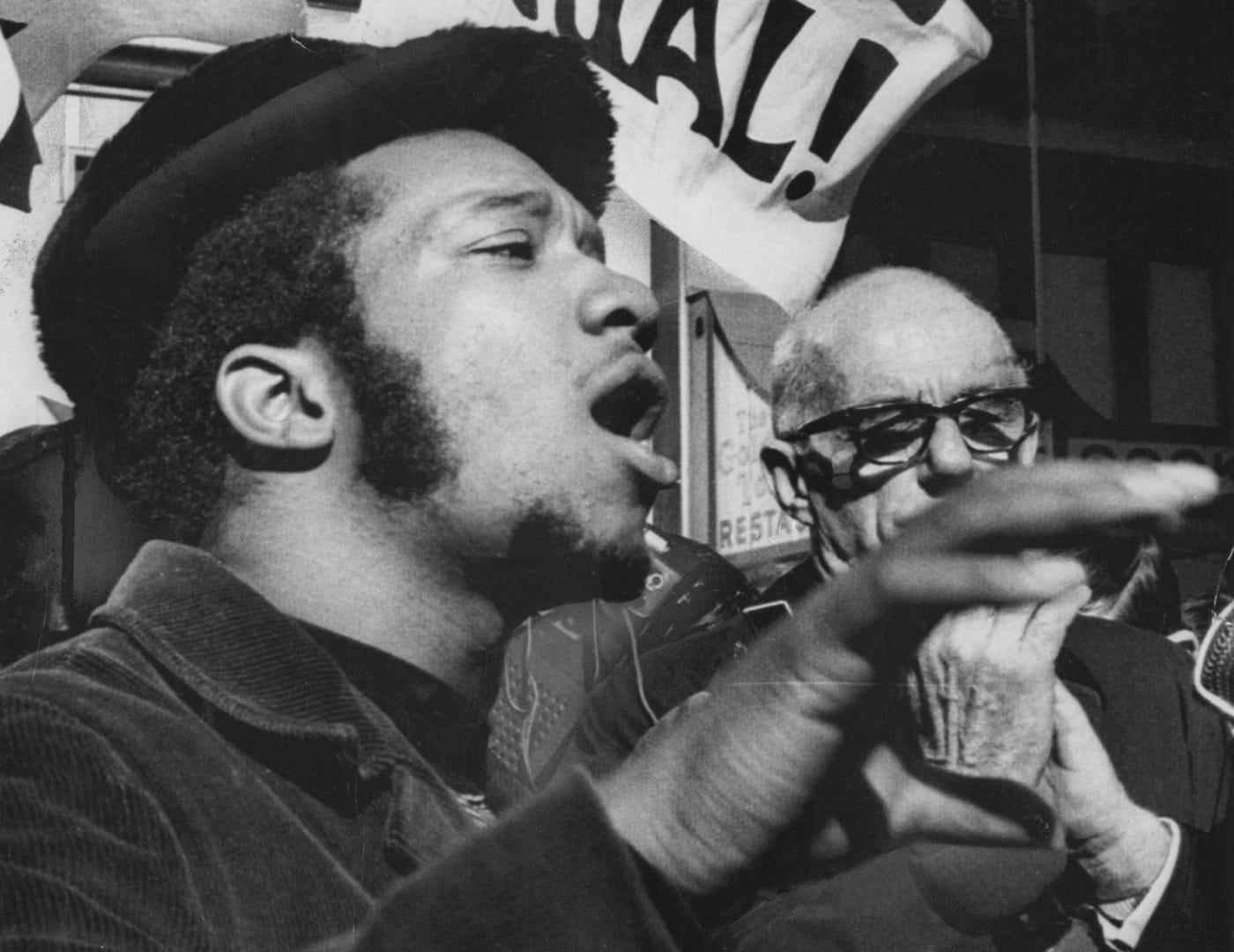
With Hampton at the helm of the Chicago Panthers, the group flourished, but the rise of the Panthers wasn’t exactly welcomed by the US government, as violent confrontations continued to persist. FBI Director Herbert Hoover deemed the Black Panther Party “the greatest threat to the internal security of the country.” This came at a time when the Ku Klux Klan still lynched African Americans in the Deep South. In spite of this, the FBI had its eye fixed on the Panthers and their new charismatic leader.
The Government
There are several reasons why the government targeted the Panthers to this extent. First of all, they were an armed organization that was involved in shootouts with law enforcement officials and, in one infamous case, the torture and murder of suspected informant Alex Rackley. Panther member George Sams led the torture because he suspected Rackley of being an FBI informant. He later incriminated Panther leaders Bobby Seale and Ericka Huggins, stating that they ordered the torture and murder of Rackley. There was, however, never any evidence that Rackley was an FBI informant or that Seale or Huggins had any part in the crime. Both Bobby Seale and Ericka Huggins were acquitted in their trials. Some even suggest that George Sams was actually the FBI informant and that he wanted to cover his tracks by framing and murdering an innocent Panther. This version is most prominently displayed in the 2021 film “Judas and the Black Messiah”.
George Sams was convicted for murder. He got out on parole in 1974.
The other, more obvious reason for the FBI’s relentless focus on the Panthers lay in their economic ideology. The Black Panthers renounced capitalism, seeing it as a tool that was being used by the powerful to suppress minorities. For many African Americans, the freedom, the wealth, and the equality that had been promised by capitalism never materialized. The resulting anti-capitalist and Marxist stances deeply worried the US government, which, at that time, was in an arms race with the communist Soviet Union and waging an endless war against communist Vietnam.
Internal FBI documents show that the Bureau had its eye fixed on one particular leader of the Panthers: Fred Hampton. FBI Director Hoover once voiced concerns that Hampton could become a “messiah” with the talent to “unify, and electrify, the militant black nationalist movement.” Hampton wasn’t the only black leader who was labeled by the FBI in such a manner. The Bureau had previously targeted other leaders, “possible agitators” as they called them, like Malcom X or even Dr. Martin Luther King Jr.
After a shootout between the Panthers and the Chicago Police, in which multiple police officers died, the Chicago Tribune urged officers to be “ready” to shoot when approaching Black Panther members. Tensions ran high, and that’s when the Chicago Police and the FBI decided to carry out a long-planned operation.
The Murder
When Fred Hampton abruptly fell asleep that night, it wasn’t because he was overworked or hadn’t slept in days. It was because he had been drugged by someone he thought to be a friend.
William O’Neil, a member of the Panthers who had spent the evening with Fred Hampton and prepared the group dinner that night, was, in fact, an FBI informant. Ahead of the dinner, he slipped a secobarbital into Hampton’s drink, sedating the young leader. It was the preparation, the first step in a carefully constructed assassination. An assassination that was later twisted and turned to match the narrative of the police.
At around 4 a.m., the Chicago Police arrived. Heavily armed and well prepared, they took about 45 minutes before they decided to go into the house. Their legal basis: A search warrant for illegal weapons. But the Chicago Police didn’t come to search for any equipment; they came for Fred Hampton.
First, they fired an unprovoked shot into the chest of Mark Clark, who was on security duty. Clark had not fired at the police at all. It was only when the 22-year-old died that he suffered a reflexive convulsion, which triggered his shotgun, sending a bullet into the ceiling. This was the first and only shot the Black Panthers would fire that evening. The Chicago Police would go on to fire at least 90 rounds.
After entering the home, the police quickly moved to Hampton’s bedroom. This was made possible by the extensive information the police got from O’Neil, which included a hand-drawn map of the building. When the officers arrived at Hampton’s bed, he had already been hit in the shoulder. Barely awake because of his sedation and wounded by a gunshot, Hampton didn’t move. The police quickly dragged 18-year-old Deborah Johnson, pregnant with Hampton’s child, out of the room. According to later statements, Hampton only managed to open his tired eyes with great effort. The police went on to fire two shots, directly into Hampton’s head, killing him on the spot. He was 21 years old.
Deborah Johnson later stated that she heard an officer say, “He’s good and dead now.”
The officers dragged Hampton’s body out of the house and turned their fire on the four remaining Panthers in the northern part of the building, seriously wounding them. They dragged them out, beat them, and arrested them. The charges? Aggravated assault and the attempted murder of a police officer.
The police had their story, and the seven surviving Panthers were branded as the perpetrators. The day after the assassination, the police held a press conference where they declared that the officers had been attacked by “violent” and “extremely vicious” Panther members and only acted in self-defense. The surviving Panthers were indicted by a grand jury on multiple charges, including attempted murder.
The Investigation
The Panthers, however, were smart. After the raid, the house was left unguarded by the police. Instead of seeking vengeance or holding a violent protest, they opened their doors.
Anyone could come in and inspect the scene of the crime. Amongst those who came was photographer Norris McNamara, who documented everything, including the bullet holes that unquestionably came from the officer’s guns and not from the Panthers’.
But the police quickly sent their own photographs to Chicago’s conservative newspaper, the Chicago Tribune. These photographs showed bullet holes that the police claimed came from Panther gunfire. It was only after Chicago’s liberal newspaper, the Chicago Sun-Times, implored its colleagues to visit the scene themselves that the story was finally corrected. It turned out that the bullet holes in the photographs sent by the Chicago Police weren’t bullet holes at all. They were nailheads.
It was the first step in an investigation, often carried out by curious reporters, that revealed the story you’ve just heard: The Panthers did not fire a single shot at the police, while officers fired between 90 and 99 times. Fred Hampton did not die in a shootout with the police; he was murdered in his sleep. The charges against the surviving Panthers were dropped, but the police officers never faced any consequences. Neither did the FBI nor Cook County State’s Attorney Edward Hanrahan, who organized the raid. In the months leading up to the raid, Fred Hampton publicly criticized Hanrahan for his conduct as a state attorney.
Four weeks after Fred Hampton’s death, Dakota Johnson gave birth to their son, Fred Hampton Jr.. Apart from a lack of consequences, there seemed to be, and for some, there still is, a lack of real guilt. Most years, on the anniversary of Fred Hampton’s assassination, his gravestone would get shot up, allegedly by policemen. Today, Fred Hampton’s gravestone is riddled with bullet holes.
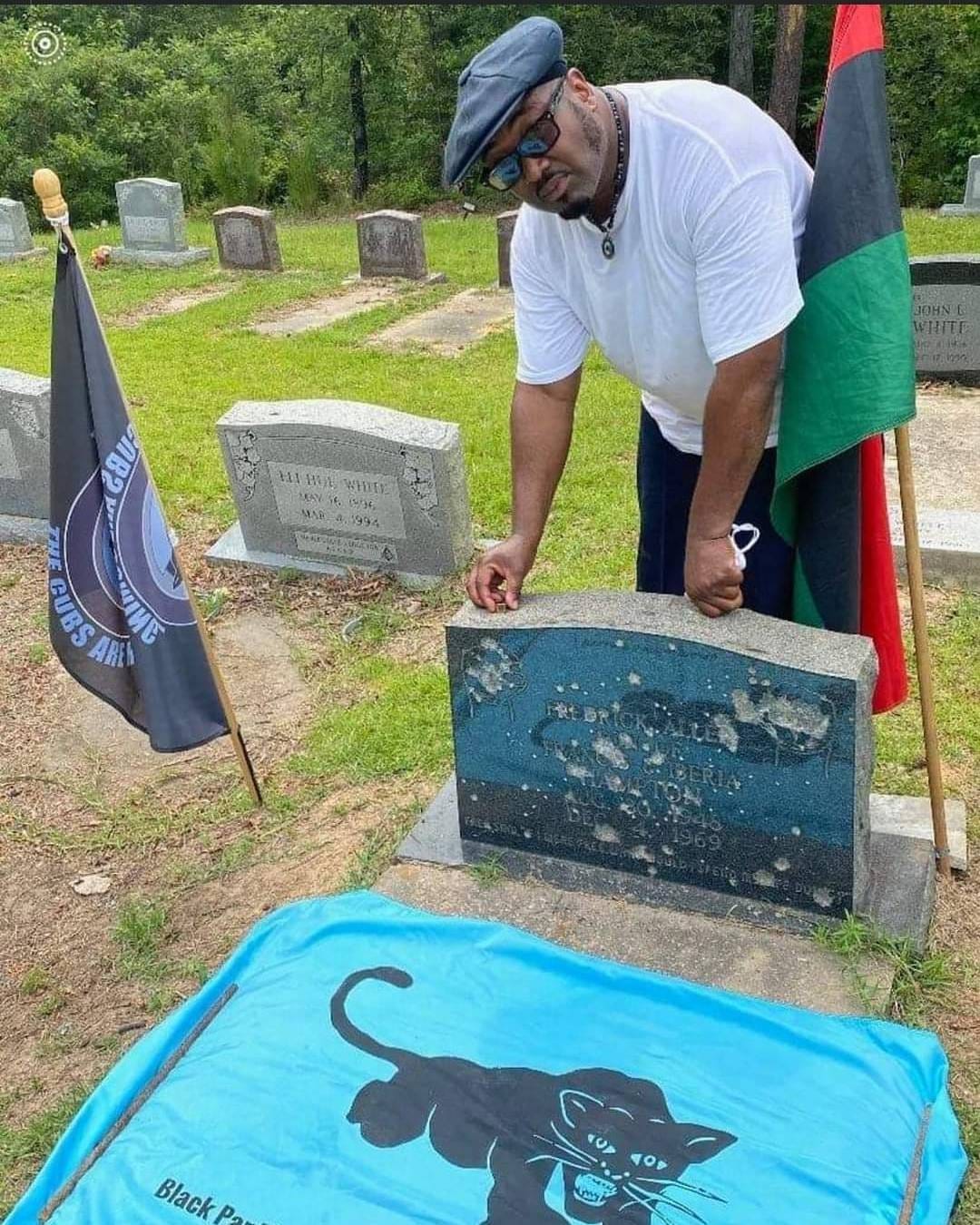
For those who wish to find out more about Fred Hampton and his murder by the Chicago Police, I can highly recommend the 2021 film “Judas and the Black Messiah” as well as the Documentary “The Murder of Fred Hampton”.