


In the 1960s, the United States took a monumental leap forward. Propelled by the civil rights movement around Dr. Martin Luther King Jr., Democrats passed both the Civil Rights Act and the Voting Rights Act. These laws, fought for by Democratic Presidents John F. Kennedy and his successor Lyndon B. Johnson, ensured the end of segregation in the South and enshrined African American’s constitutional right to vote into federal law.
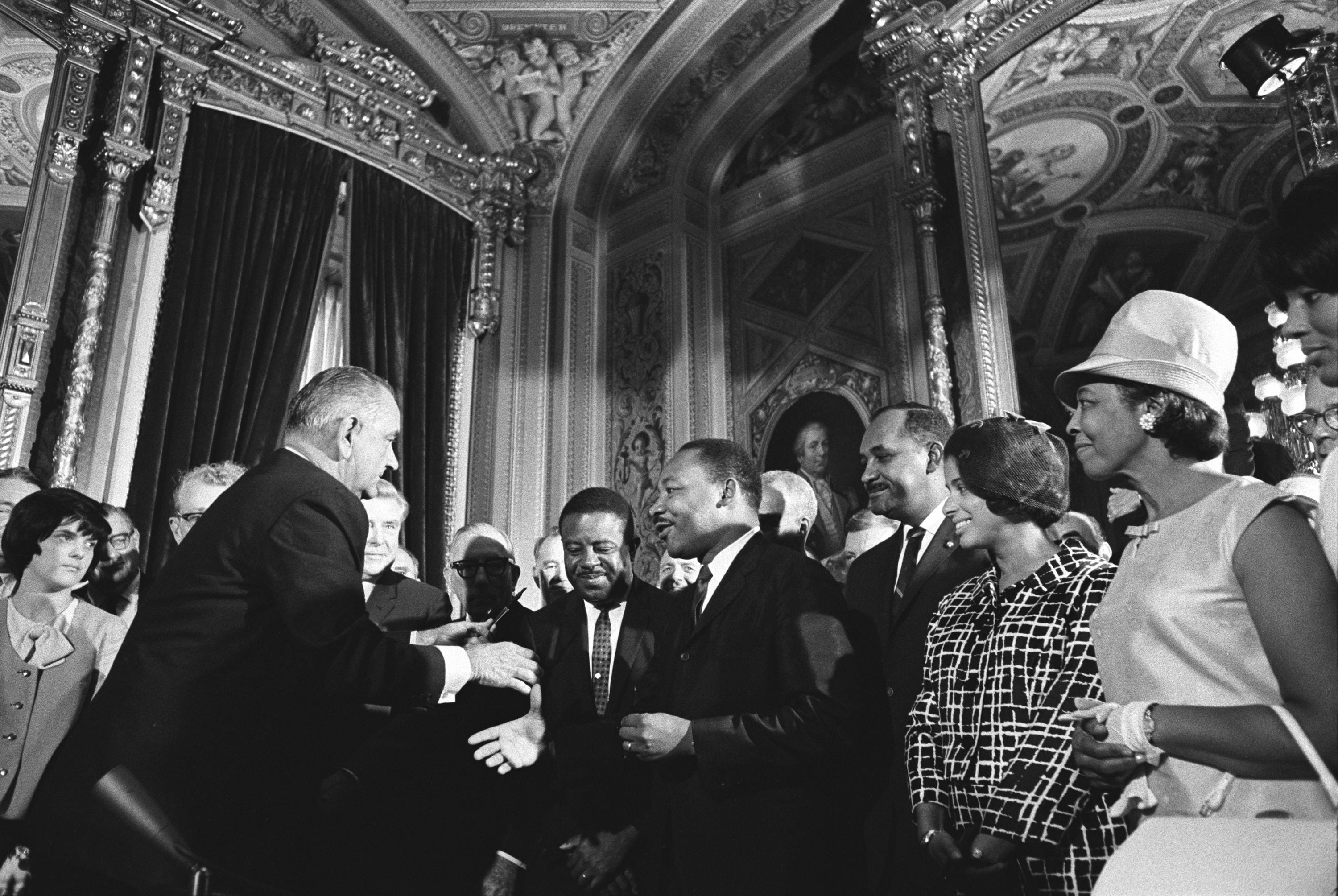
It was the end of a historic party shift. Decades before the civil rights movement, Republicans like President Lincoln were abolitionists while southern Democrats were largely in favor of segregation and other racist policies. After the passage of the Voting Rights Act, Democratic segregationists switched to the Republican bloc.
The civil rights movement ended the segregation era and millions of black Americans could finally register to vote. But not everyone was happy, particularly white southerners with racist sentiments, who didn’t like the idea of black Americans voting and sitting on their buses. That’s why President Johnson told one of his aides: “We have lost the South for a generation”.
He was right. The backlash to Johnson's civil rights policies prompted him to lose many southern states, while he swept the rest of the country in 1964. Republicans, however, knew that it wouldn’t be this easy to flip the South for good. African Americans, who make up about a third of most southern states, were registering to vote there and would turn out for the Democrats who helped them beat segregation. Also, party loyalties run deep in the South so it would take a long time for Republicans to sweep the area in Presidential, Senate, and House elections.
They needed a strategy that would help them win again and when they looked at continuing racism and the frustration many white voters had with civil rights for African Americans, they had an idea. They came up with the “southern strategy.”
Play to Racism, Win Elections
The Republican Party, starting with Goldwater in 1964 and Nixon in 1968, wanted to use the frustration of white Southerners to their advantage. They saw little value in communicating the importance of civil rights for African Americans. After all, that wouldn’t have won them the South. They created a playbook that was aimed at courting these voters by emboldening their racist sentiments.
But they had another problem. Segregation was defeated, you couldn’t just be racist as a public figure. They needed coded language. Words and phrases that racist voters would understand so that they see a politician who secretly shares their racist sentiments. Instead of blunt racism, or using the N-word, Republicans started using phrases like “states rights” or “forced busing” to play to these sentiments. Historian David Greenberg called this rhetoric which was also used by Ronald Reagan “dog-whistle politics”.
Richard Nixon’s 1968 campaign focused on “states’ rights”. This was a centerpiece of coded language, as segregationists had long argued that the federal government should not meddle in the segregational policies of southern states. The states’ rights, they said, must keep the federal government at bay. In the end, the federal government enforced civil rights laws to end the Segregation-Era.
Nixon’s “states’ rights” strategy was criticized as just another coded attempt to speak to the racism of white southerners by symbolizing white resistance to civil rights. According to White House Chief of Staff H. R. Haldeman, Nixon:
"emphasized that you have to face the fact that the whole problem is really the blacks. The key is to devise a system that recognized this while not appearing to"
Nixon was fully aware of his strategy and the underlying racism that had to be hidden in coded language. He was perhaps also pressured by George Wallace, a former Democrat and governor of Alabama, who ran as an Independent and promised to restore segregation. On the other side, Democratic Candidate Hubert Humphrey vowed to continue the fight for civil rights, further alienating Southerners.
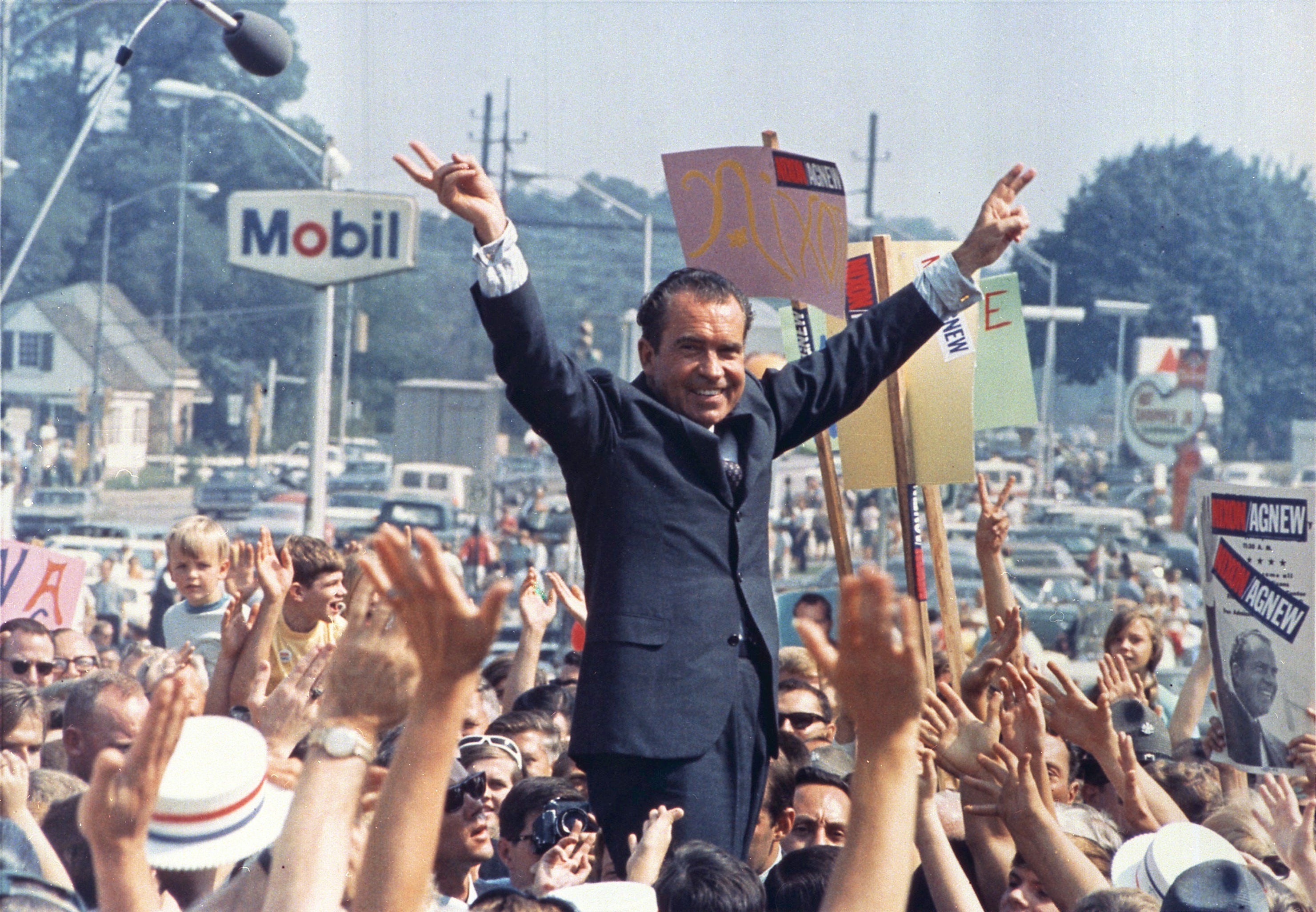
In the end, Nixon’s strategy proved successful. While Wallace won far-right voters in the deep South, Nixon’s coded language won enough votes in less extreme southern states, securing the Presidency. One also needs to note the Vietnam War, which was a highly polarized issue at the time that led to internal fights among Democrats and helped Nixon.
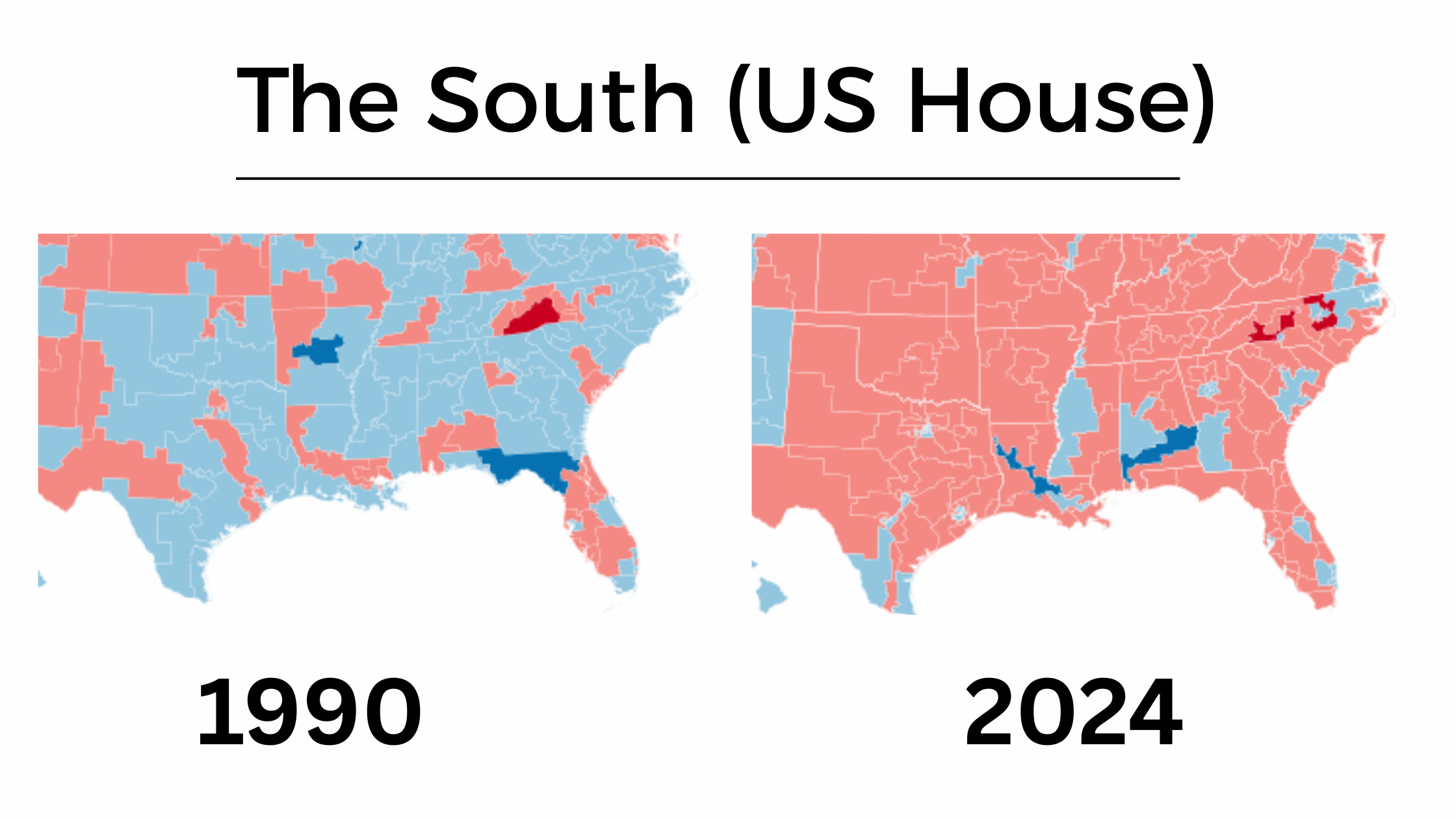
Over time, it became increasingly difficult for Democrats to win southern states on the presidential level, as white voters there flocked to Republicans. The change took longer for Congress and Senate seats. The era of the Southern Democrat only ended after the 2010 midterm elections, when most remaining Democrats in the South, who had held onto their seats in landslide elections in `06 and `08, finally lost their seats. Today, the white South is ruby red. The only competitive state is Georgia due to its diverse and booming Atlanta metro area paired with a high share of African American voters.
The Southern Strategy is still being used - The DEI rhetoric
In the 21st century, the Republican Party is still not done with coded language and their “Southern Strategy.”
Donald Trump’s talking points are the best example. This year, he and his Party fired against DEI (Diversity, Equity, and Inclusion) initiatives that aim to help members of minority and underrepresented groups overcome barriers. After the horrific plane crash in Washington, Trump baselessly blamed DEI initiatives, arguing it’s “common sense” to think diversity was the cause of the crash.
The highly qualified Supreme Court Justice Jackson repeatedly gets called a “Diversity-hire” or “DEI-hire” by right-wing Republican influencers like Charlie Kirk, who thereby argue that Jackson lacks any qualification beyond her ethnicity.
This continuous use of DEI rhetoric to cast minority members as unqualified or as the root of the problem can be classified as coded language.
Even Trump or Charlie Kirk would have trouble getting away with saying that Organizations should bar black, Hispanic, or queer people from important roles. Instead, they use coded language like “Diversity Hire” to play to still-existing racist sentiments.